
How to Develop Custom Souvenirs for Tourist Attractions.
author: DP58
2026-10-28
How to Develop Custom Souvenirs for Tourist Attractions.
Introduction
Tourist attractions are unusual retail environments. Customers are captive, time-poor, emotionally primed, and physically loaded — they are carrying bags, managing children, and thinking about the next stop. They buy souvenirs in a narrow window, often within minutes of leaving, and they buy for reasons that have almost nothing to do with normal retail logic: proof of visit, gifting obligation, memory preservation, and the urge to mark a significant experience.
Developing souvenirs for this environment requires a different playbook from ordinary product development. It has to account for the attraction's operational constraints (seasonality, storage, security, multiple outlets), the visitor's psychology, and the merchandising realities of a shop that may be a converted storeroom with two metres of shelf space.
This guide covers the full development process for tourist attraction souvenirs, from visitor research through to post-season review.
1. Understand the Attraction's Visitor Mix
Start with data, not assumptions. For each attraction, establish:
-
Annual and seasonal visitor volume, with peak and shoulder season patterns.
-
Visitor composition: families, school groups, couples, international tourists, local repeat visitors.
-
Average dwell time and where in the visit the shop sits (exit-only vs. mid-visit).
-
Average spend per visitor on retail, and per-capita spend benchmarks for comparable attractions.
-
Language mix — determines packaging and signage requirements.
-
Group vs. individual split — group bookings have different gifting needs and often pre-order.
The visitor mix determines everything downstream. A family-heavy attraction needs entry-tier, child-appeal, and photo-friendly items. An international-heavy attraction needs language-neutral designs and compliance with multiple markets' toy and food-contact regulations. A local-repeat-heavy attraction needs seasonal novelty and collectability, not one-off souvenirs.
2. Define the Attraction's Souvenir Story
Every attraction has a story that visitors want to take home. Define it in three layers:
-
The icon — the single image or object the attraction is known for (the animal, the building, the ride, the view).
-
The narrative — the one or two facts or feelings visitors most often mention (the record-breaking height, the rescue story, the view at sunset).
-
The experience — what visitors did there (climbed, fed, rode, explored).
Strong souvenir ranges draw on all three layers: an icon item (recognisable form), a narrative item (fact-led or story-led design), and an experience item (something that recreates or commemorates the activity). Attractions that only produce icon items end up with a shelf of near-identical products.
3. Respect Operational Constraints
Attraction retail has hard constraints that generic souvenir suppliers often ignore:
-
Storage space. Shops are frequently small with limited back-of-house. High-volume, bulky items create logistics problems. Prefer items that are compact, stackable, and shippable in small cartons.
-
Security and shrinkage. High-value items need secured display; small, high-value items are theft-prone in crowded shops. Plan fixture and packaging accordingly.
-
Durability in transit and handling. Visitors carry purchases around for hours. Fragile protrusions, weak joints, and delicate paint are return and complaint generators.
-
Seasonality. Peak-season stock-outs are lost revenue that cannot be recovered. Plan production so that peak-season inventory lands 6–8 weeks before peak.
-
Multi-outlet consistency. Attractions with several shops, kiosks, or vending points need a single product and packaging system that works everywhere.
-
Food and beverage adjacency. If sold near food service, check food-contact compliance and cross-contamination rules for items like mugs, bottles, and utensils.
-
Weather exposure. Outdoor kiosks need UV-stable, water-resistant packaging and products.
4. Build the Range Around Visitor Missions
Visitors arrive with a small number of shopping "missions". A well-built attraction range covers them:
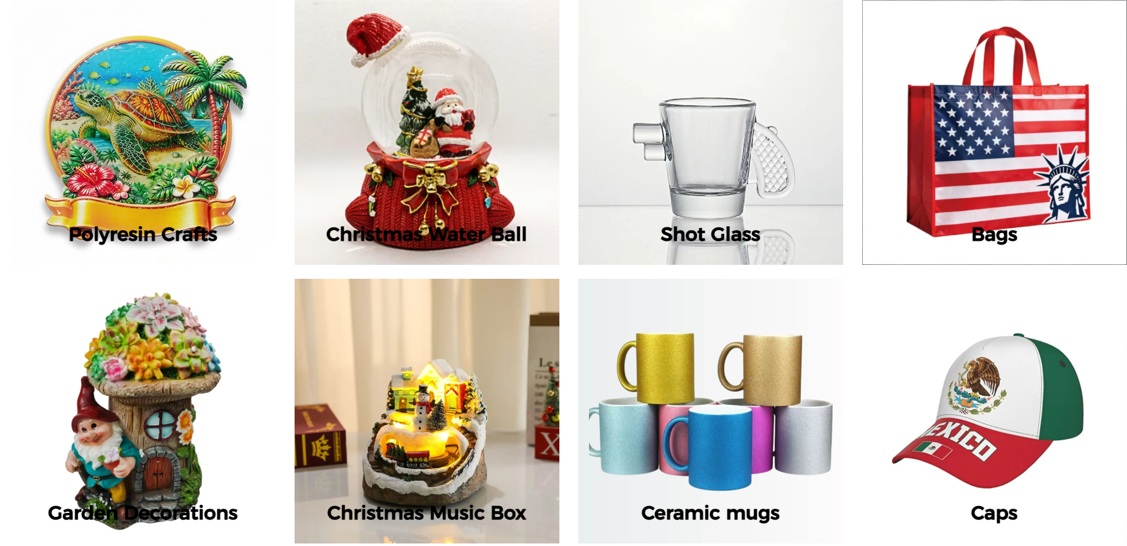
|
Visitor mission
|
What they want
|
Typical items
|
|
Proof of visit
|
Something that shows they were there
|
Photo frames, magnets, keychains, postcards
|
|
Gift for someone else
|
Affordable, recognisable, easy to carry
|
Magnets, small figurines, mugs, sweets
|
|
Gift for a child
|
Fun, safe, age-appropriate
|
Plush, toys, activity books, pencils
|
|
Treat for themselves
|
Higher-value, personal, practical
|
Apparel, bags, jewellery, homeware
|
|
Collector's item
|
Limited, numbered, premium
|
Figurines, limited editions, pins
|
|
Practical need
|
Useful during or after the visit
|
Water bottles, ponchos, hats, tote bags
|
A range that covers all six missions needs roughly 10–20 SKUs for a mid-size attraction, with the impulse missions (proof of visit, gifts) accounting for the majority of unit volume. Ranges that cover only one or two missions underperform badly — the classic case being an attraction that sells only premium figurines and wonders why families spend nothing.
5. Get the Price Points Right for the Environment
Attraction pricing has its own logic:
-
Anchors at round, memorable numbers — visitors make fast decisions; odd pricing creates friction.
-
A clear entry price that is low enough for an impulse decision after ticket, food, and transport costs.
-
A visible premium tier — even if few buy it, it raises perceived value of the core range.
-
Bundle and multi-buy options for families and gift buyers.
-
Consistent pricing across outlets to avoid complaints and staff confusion.
Benchmark against comparable attractions in the region, not against general retail. Attraction pricing carries a convenience premium, but exceeding the local benchmark by more than roughly a third invites resentment and online criticism.
6. Design for the Shelf and the Photo
Attraction shops have limited display space and heavy footfall. Design for both:
-
Shelf readability at two metres. The icon and brand must read instantly at display distance.
-
Vertical merchandising. Items that stack or hang save shelf space and increase facing counts.
-
Photogenic packaging. Visitors photograph and share purchases; packaging that looks good in a phone photo is free marketing.
-
Stackable, shippable cartons in small unit counts for easy replenishment from limited back-of-house.
-
Theft-resistant but open display — avoid sealed clamshells that require staff assistance, which slows queues at peak.
7. Plan the Development Calendar Around the Season
Attraction souvenir development is calendar-driven, not demand-driven. A workable annual calendar for a summer-peak attraction:
|
Month (relative)
|
Activity
|
|
T-9 to T-8
|
Visitor and sales data review; range plan and price architecture
|
|
T-7 to T-6
|
Concept and design development; factory briefing; maquettes
|
|
T-5 to T-4
|
Prototype rounds; compliance testing; packaging design
|
|
T-3
|
Pre-production samples approved; PO placed
|
|
T-2
|
Production complete; QC and shipping
|
|
T-1
|
Stock lands in warehouse; staff training; display build
|
|
Peak season
|
Sell, monitor, replenish
|
|
Post-season
|
Review; cut, extend, and plan next cycle
|
Compressing this calendar is the single most common cause of peak-season stock-outs and air-freight costs that destroy margin.
8. Handle Compliance and Safety Properly
Attraction souvenirs reach children and international visitors, so compliance is non-negotiable:
-
Toy safety (EN71 in the EU/UK, CPSIA in the US, GB 6675 in China) for anything marketed to under-14s — including plush, figurines sold as toys, and some novelty items.
-
Food-contact compliance (EU 1935/2004, FDA 21 CFR) for mugs, bottles, and utensils.
-
REACH / chemical restrictions for materials and coatings.
-
Age labelling and warnings on packaging.
-
Small-parts hazards for items with detachable components.
Budget for third-party testing at the start of development, not at the end. A failed test after production is a total loss.
9. Brief and Manage Suppliers for the Attraction Context
When sourcing from manufacturers (including overseas suppliers such as those in China), include in every brief:
-
Visitor profile and mission coverage the SKU must serve.
-
Shelf-space and carton-size constraints.
-
Durability requirements (drop test, handling, UV exposure).
-
Multi-language packaging requirements.
-
Peak-season delivery windows with penalties for late delivery.
-
Compliance certifications required per market.
-
Replenishment lead times and minimum reorder quantities.
For first-time buyers, order a pilot quantity (100–500 units per SKU) to test sell-through in one outlet before committing to full-season volume.
10. Measure, Review, and Iterate
Track the metrics that matter for attraction retail:
-
Retail spend per visitor (the headline number).
-
Conversion rate (buyers ÷ visitors passing the shop).
-
Units per transaction and attach rate across the range.
-
Sell-through by SKU and by mission category.
-
Stock-out days in peak season — each one is measurable lost revenue.
-
Return and complaint rate, especially breakage and safety issues.
-
Review sentiment mentioning the shop or souvenirs.
Use the post-season review to make three decisions: which SKUs to cut, which to extend or reorder, and which visitor missions are still under-served. Then feed those decisions into next year's calendar at T-9.
Conclusion
Custom souvenirs for tourist attractions succeed when development is treated as an operational discipline: understand the visitor mix, define the attraction's story, respect the shop's physical constraints, cover the full set of visitor missions, price for the environment, work to a season-driven calendar, and review rigorously after each season. Attractions that build this system — rather than buying whatever a supplier happens to offer — turn their gift shop from an afterthought into one of the most reliable profit centres on site.
How to Develop a Custom Souvenir Collection for Your Brand
